Fix Intercompany Reconciliation:
If your business runs multiple entities, intercompany reconciliation
Read More →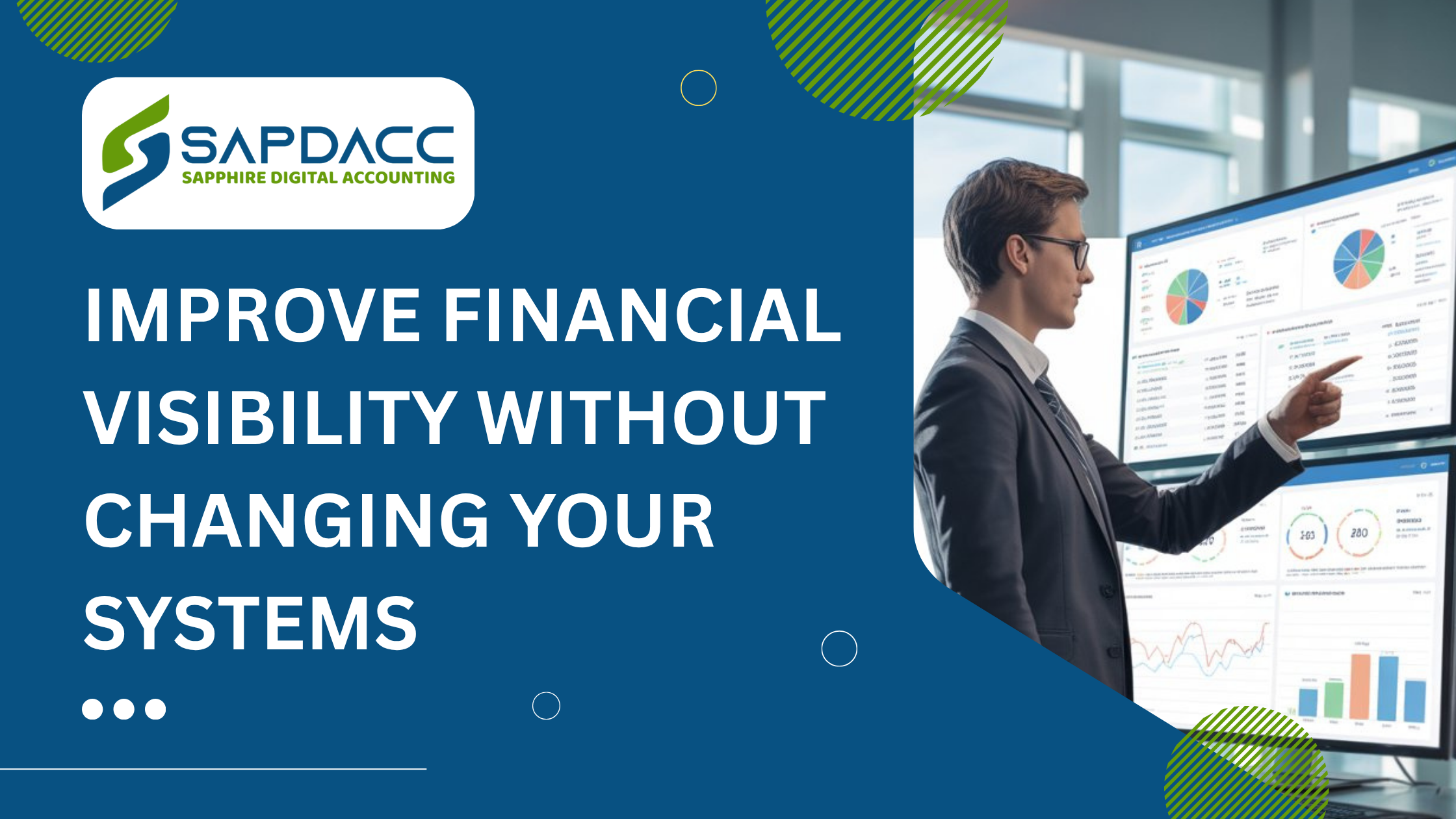
Many Australian businesses assume better visibility requires a new system, a new ERP, or a major finance transformation. In practice, the most common visibility issues come from something simpler: the finance workflow feeding your system isn't consistent.
If AR/AP is behind, reconciliations are delayed, or month-end close keeps slipping, your reports will never feel current—regardless of the software you use.
The good news: you can improve financial visibility significantly without changing your systems.
When visibility drops, decisions get slower and risk increases
Financial visibility isn't just about reporting. It affects cash flow control, stakeholder confidence, and how quickly leaders can make decisions.
Common symptoms we see in growing Australian SMEs and mid-sized businesses:
Real-world impact:
It's usually process and capacity—not the system
Most businesses don't lose visibility because the software is wrong. They lose visibility because execution is inconsistent.
Processing happens in bursts. Approvals sit in inboxes. Queries stay unresolved. The system contains data, but it's not current enough to rely on.
Disputes, missing documents, credit notes, and mismatches sit across emails and spreadsheets. Without a clear exception log, issues linger and reporting delays become routine.
Reconciliations should be a monthly discipline, not a month-end emergency. When bank and balance sheet accounts aren't reconciled on time, reporting becomes a guess-and-correct cycle.
In many Australian SMEs, one key person "holds the process together." Leave, turnover, or workload spikes quickly reduce visibility and increase risk.
Businesses with trading workflows often face additional complexity from inventory and order processing and, in some cases, EDI order processing accounting—where timing, documentation, and exceptions directly affect reporting accuracy.
Improve visibility by strengthening execution inside your existing systems
The fastest way to improve visibility is to stabilise the workflow that feeds your reports: AR/AP, reconciliations, close routines, documentation, and exception tracking.
A practical approach typically includes:
Stabilise AR/AP workflows
Improve invoice accuracy and reduce rework
Make reconciliations a routine control
Where outsourcing fits (structured, not disruptive)
When internal teams are stretched, outsourcing becomes a practical way to introduce structure and capacity while keeping control with your leaders.
Depending on what's breaking, this may include:
The key point: visibility improves because execution becomes consistent—not because systems change.
What improves when finance execution becomes consistent
A growing Australian business has a solid accounting platform but poor visibility. AP approvals are delayed, AR allocations fall behind, and reconciliations are left until month-end. Reports arrive late and keep changing.
By stabilising payables workflows, tightening AR follow-up and allocations, introducing consistent invoice checks, and completing monthly reconciliations, the business improves cash visibility and shortens reporting turnaround—without changing systems.
Sapphire Digital Accounting supports Australian SMEs and mid-sized businesses as an outsourced operational finance partner. We work within your existing systems to strengthen AR/AP delivery, reconciliations, month-end close readiness, and reporting support—so financial visibility improves without operational disruption.
You don't always need a system overhaul to improve financial visibility. In many Australian businesses, visibility improves when the finance workflow becomes consistent: AR/AP stays current, reconciliations are routine, exceptions are tracked, and month-end reporting follows a repeatable cadence.
Outsourcing can be a practical way to introduce the structure and capacity required—without changing your systems or losing control.
Book a consultation or speak to a finance expert to review your current finance setup. We'll help you identify where visibility is breaking down and map a practical outsourcing approach that works inside your existing systems.
If your business runs multiple entities, intercompany reconciliation
Read More →
If your business operates across multiple entities, month-end close
Read More →
If reporting is always "a few days away", it's rarely a reporting issue.
Read More →
If your business is growing, your invoice volume usually grows even faster. More suppliers, more approvals, more customer billing, more exceptions.
Read More →